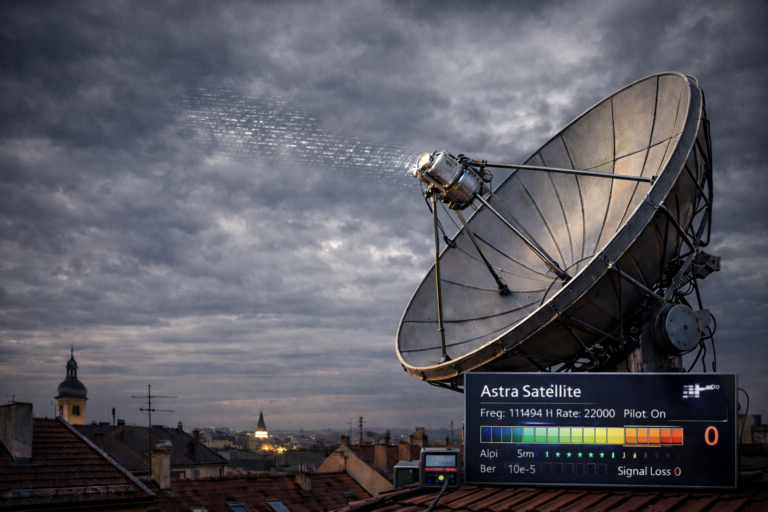
How Astra 19.2°E Supports Live Sports Broadcasting in Europe
Estimated reading time: 16 minutes.
Live sports is the toughest content type to distribute. Audiences peak at the same moment. Viewers demand real time continuity. And the broadcast becomes part of the event itself. Astra 19.2°E continues to support live sports broadcasting in Europe because it is built for synchronized mass viewing. This article explains the practical reasons that satellite distribution remains a core tool for live sports.
Quick Context
This article focuses on distribution reliability for live sports rather than competition details. It explains why stable delivery remains critical during peak match moments.
- Why Live Sports Is a Distribution Stress Test
- Peak Audience Moments and Synchronized Demand
- Continuity, Timing, and Viewer Trust
- Why Satellite Scales Naturally for Live Events
- Satellite as a Stability Layer in Hybrid Sports Delivery
- Operational Planning for Match Nights
- Reality Check
- Final Verdict
- Frequently Asked Questions
Why Live Sports Is a Distribution Stress Test
Live sports does not allow recovery. A short interruption feels like a major failure because the moment cannot be replayed in real time.
This pressure changes everything. The distribution system must behave consistently under stress, not only during quiet hours.
Peak Audience Moments and Synchronized Demand
A match starts at a fixed time. Millions of viewers tune in together. Some viewers join at kickoff. Others jump in during key moments.
The demand curve is not smooth. It rises fast and spikes repeatedly. This is where satellite distribution shows its advantage.
In live sports, stability is part of the product.
Continuity, Timing, and Viewer Trust
Viewers experience live sports as a shared moment. If delivery becomes inconsistent, the shared experience breaks.
Stable timing reduces confusion and frustration. It also protects a platform’s credibility. When timing behaves predictably, the broadcast feels professional.
Why Satellite Scales Naturally for Live Events
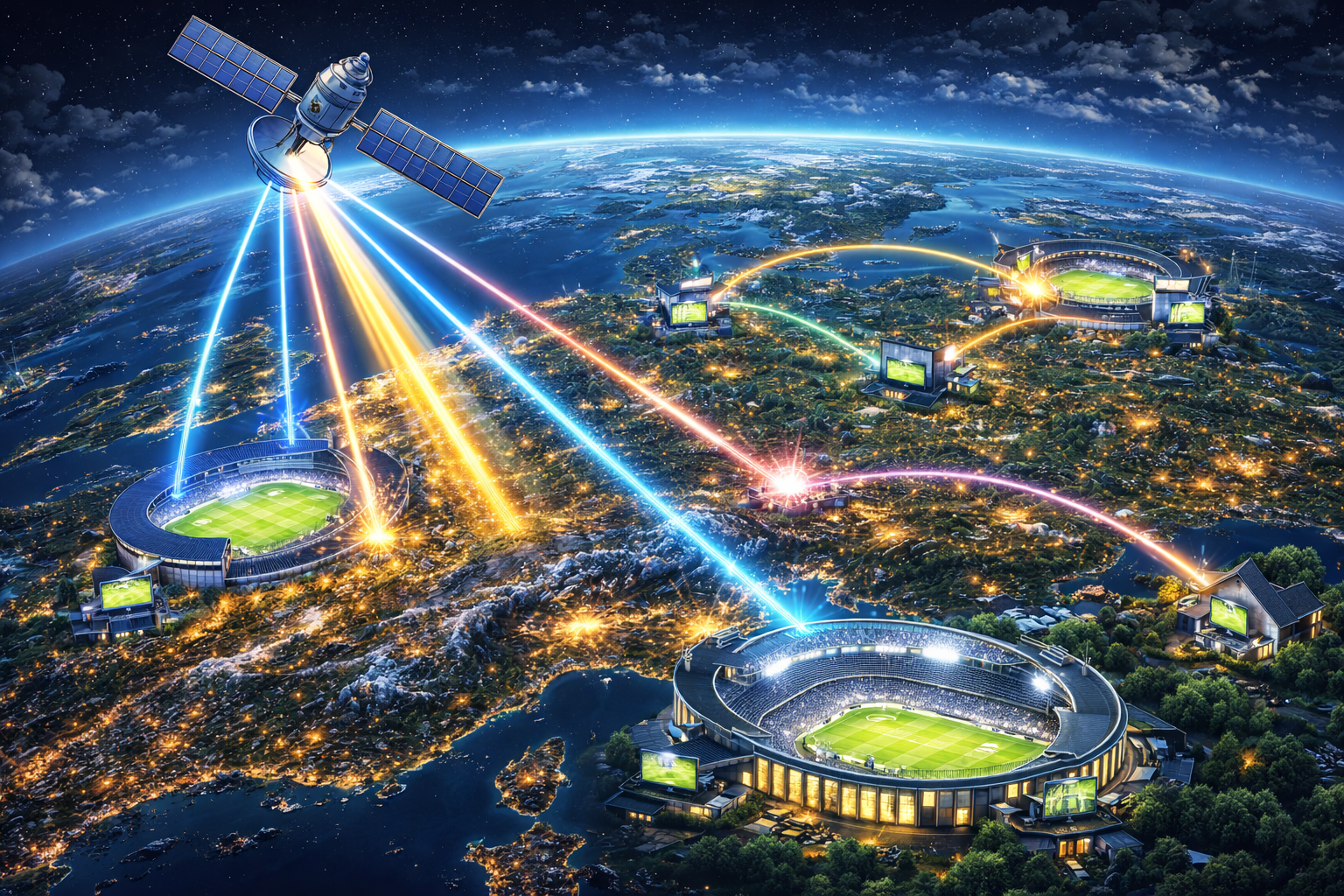
Satellite broadcasting sends one signal that many receivers can use simultaneously. Each home receives the same signal without competing with neighbors.
This is fundamentally different from systems where each viewer requires separate bandwidth. During mass events, the difference becomes visible.
Satellite as a Stability Layer in Hybrid Sports Delivery
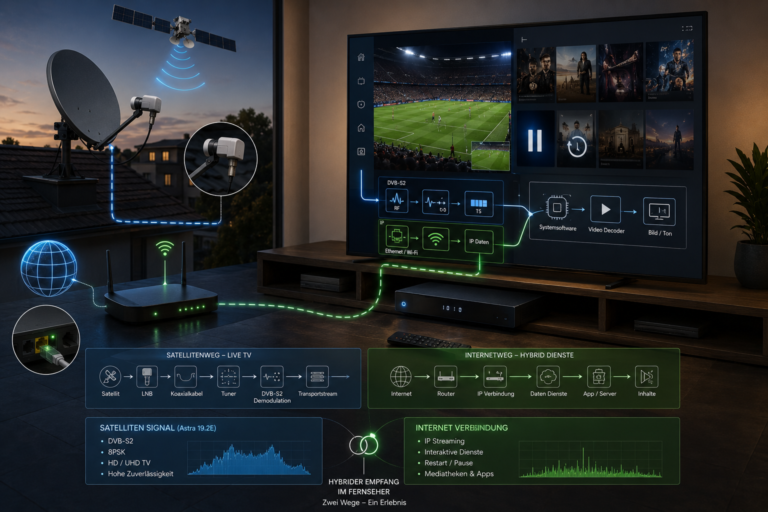
Modern sports viewing is hybrid. Some people watch through broadcast channels. Others use apps. Some switch between both.
In hybrid environments, a stable broadcast layer can reduce overall risk. Even when digital systems face congestion, satellite continues to deliver predictably.
This is one reason satellite remains valuable even when platforms invest heavily in streaming. It provides an anchor layer for high importance content.
Operational Planning for Match Nights
Live sports is scheduled. That makes it possible to plan operations in advance. Monitoring is tightened. Response teams are ready. Redundancy paths are verified.
For viewers, this planning is invisible. But it is one of the reasons live sports broadcasting feels seamless on strong distribution systems.
Reality Check
Astra 19.2°E supports live sports because satellite distribution handles synchronized mass viewing predictably. Its role is less about novelty and more about reliability during the moments that matter most.
Final Verdict
Final Verdict
Live sports broadcasting rewards systems that stay stable under pressure. Astra 19.2°E remains a strong tool for Europe because it scales naturally for mass audiences and protects continuity during peak match moments. In a hybrid media world, that stability layer is still difficult to replace.
Frequently Asked Questions
| Question | Answer |
|---|---|
| Why is live sports harder to broadcast than normal TV? | Because viewers watch in real time and interruptions feel more serious since key moments cannot be repeated live. |
| Why does satellite perform well during big match nights? | Because one signal serves many receivers at once without shared last mile bandwidth competition. |
| Does streaming replace satellite for sports? | Not fully. Streaming can work well, but large events can face congestion. Satellite remains a stable anchor layer. |
| What makes Astra 19.2°E relevant for sports distribution? | Its established infrastructure and predictable delivery across Europe during synchronized peak audiences. |