Astra 19.2 vs 28.2 Channels and Reception Guide
Estimated reading time: 16 minutes.
Astra 19.2E and Astra 28.2E may look similar from a technical point of view, but the experience of using them is completely different. The difference becomes clear when you look at the channels they carry and how easy it is to receive them in different regions. Many users discover that one satellite works perfectly while the other struggles, even with the same equipment.
This guide focuses on two main aspects. Channel distribution and real world reception behavior. These are the two factors that define how useful each satellite is in practice. Once you understand both, you can choose the right setup and avoid common reception problems.
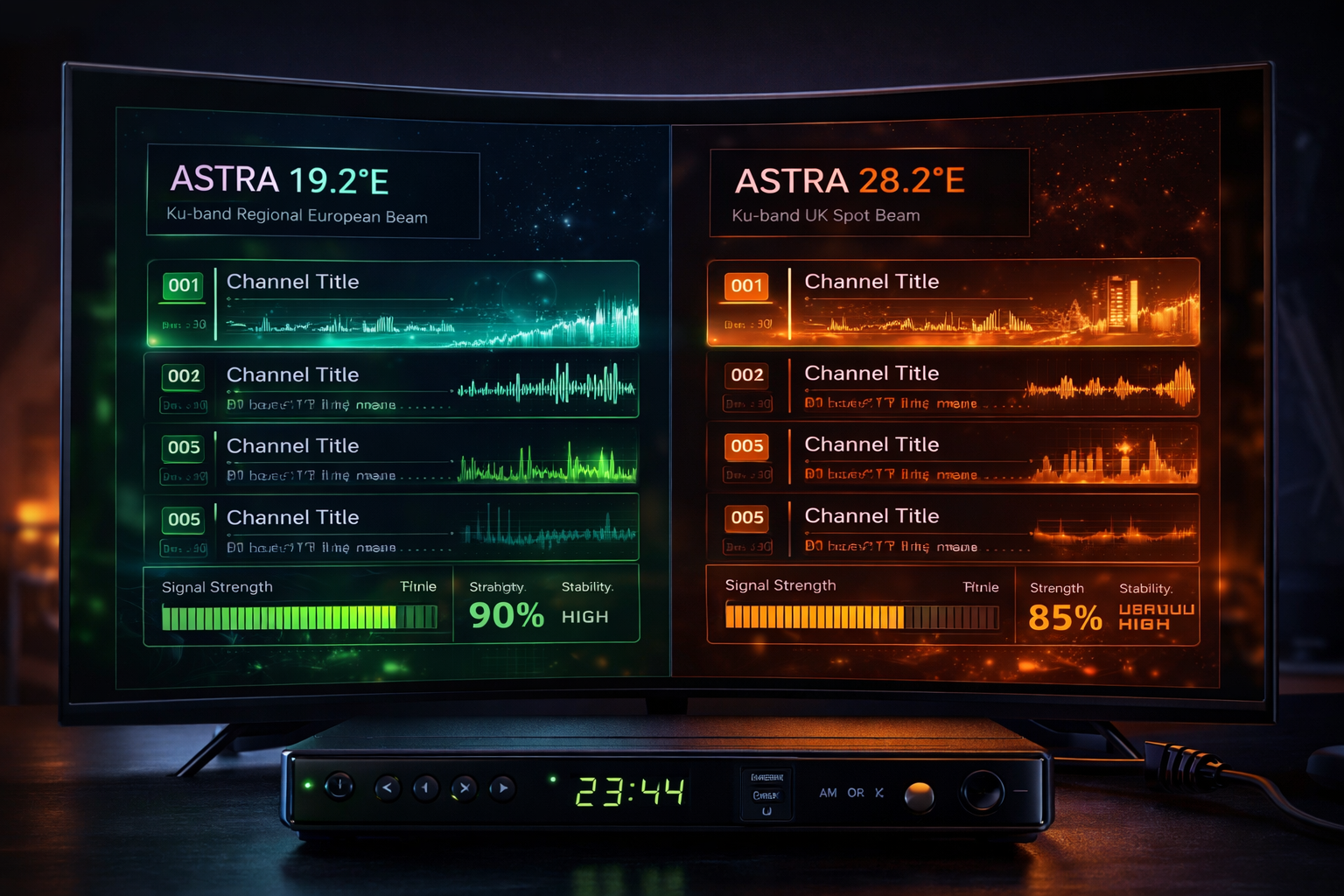
Astra 19.2E mainly delivers German and European channels with wide coverage, while Astra 28.2E focuses on UK channels with more sensitive reception outside its core area.
- Channel structure on each satellite
- Astra 19.2E channel characteristics
- Astra 28.2E channel characteristics
- Free to air vs regional broadcast behavior
- Transponder grouping and channel behavior
- Reception differences in real setups
- Dish alignment impact on channel reception
- Analytical comparison table
- Practical usage scenarios
- FAQ
Channel structure on each satellite
Channels on Astra satellites are organized inside transponders. Each transponder carries multiple channels that share the same signal conditions.
This means reception problems often affect groups of channels rather than individual ones. Understanding this structure helps explain why certain channels behave the same way.
Both Astra 19.2E and Astra 28.2E use this system, but the content and distribution strategy differ significantly.
Astra 19.2E channel characteristics
Astra 19.2E carries a wide range of German and European channels. Many of these are free to air and designed for broad European coverage.
Because of this wide distribution, channel reception is generally stable across many regions. Even weaker setups can often receive most channels.
The signal design prioritizes accessibility and consistency rather than regional limitation.
Astra 28.2E channel characteristics
Astra 28.2E focuses on UK channels. Many of these are broadcast using spot beams that target the United Kingdom specifically.
This design ensures strong reception in the UK but creates challenges outside it. Some channels may be difficult or impossible to receive in other regions.
This is why channel availability changes depending on your location.
Free to air vs regional broadcast behavior
Free to air channels on Astra 19.2E are widely accessible. They are intended for a broad audience across Europe.
On Astra 28.2E, some channels are still free to air but are restricted by beam design rather than encryption.
This creates a situation where channels are technically available but practically difficult to receive outside specific regions.
Transponder grouping and channel behavior
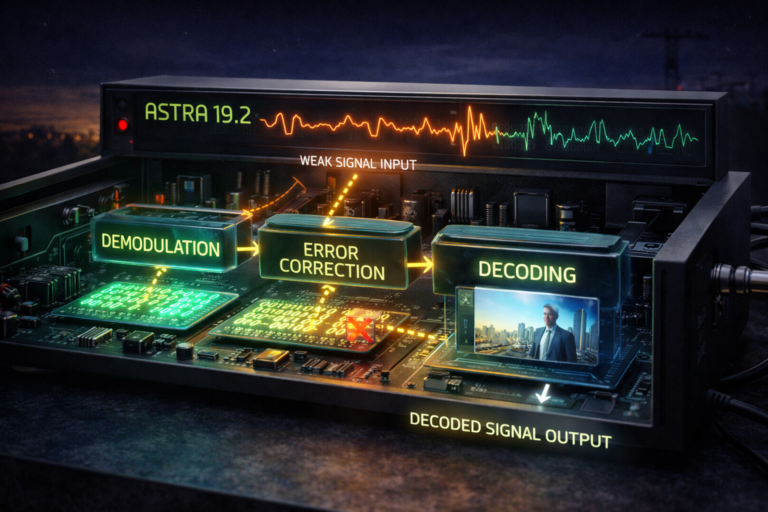
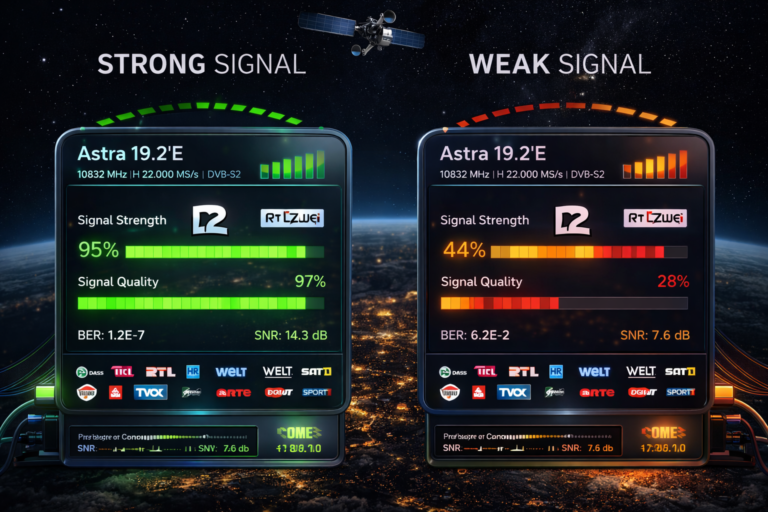
Channels on both satellites are grouped by transponders. If one transponder has weak signal, all channels on it may be affected.
On Astra 28.2E, some transponders use focused beams, making them more sensitive to alignment and location.
On Astra 19.2E, transponders are more evenly distributed, leading to consistent channel behavior.
Reception differences in real setups
In central Europe, Astra 19.2E is easy to receive with standard dish sizes. Most channels remain stable even with minor alignment errors.
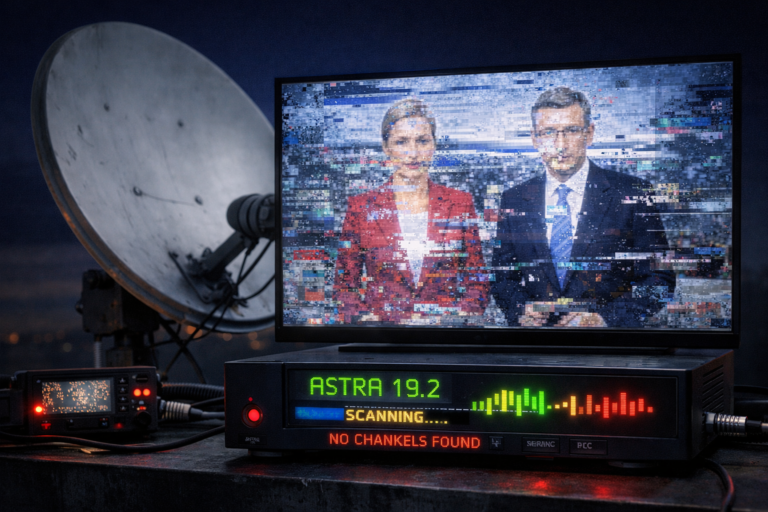
Astra 28.2E may require precise alignment and larger dishes outside the UK. Some channels may appear while others remain unavailable.
This difference is one of the main challenges users face when switching between the two satellites.
Dish alignment impact on channel reception
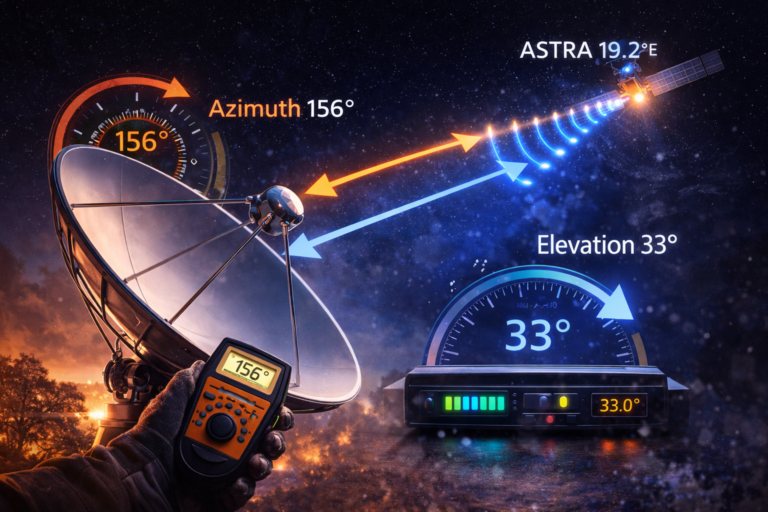
Dish alignment affects both satellites, but its impact is more noticeable on Astra 28.2E.
Because of its focused beam, small alignment errors can cause channel loss. Astra 19.2E is more forgiving due to its wide coverage.
This makes installation accuracy more critical for Astra 28.2E.
Analytical comparison table
| Feature | Astra 19.2E | Astra 28.2E |
|---|---|---|
| Channel focus | German and European | UK channels |
| Free to air availability | Wide access | Region dependent |
| Reception difficulty | Low | Higher outside UK |
| Transponder behavior | Balanced | Focused and sensitive |
| Dish sensitivity | Moderate | High outside UK |
Practical usage scenarios
If your goal is to receive German and European channels with stable performance, Astra 19.2E is the better choice.
If you want UK channels and are located within the UK, Astra 28.2E provides strong and reliable reception.
For users outside the UK who want both, a multi LNB setup is often required.
Channel availability is not only about satellite capability. It depends heavily on coverage design and your geographic location.
Astra 19.2E offers broader access and easier reception across Europe. Astra 28.2E delivers strong UK focused content but becomes more challenging outside its target region. Choosing between them depends on your viewing needs and location.
FAQ
| Question | Answer |
|---|---|
| Which satellite has more channels | Both have many channels but focus on different regions. |
| Why can I receive Astra 19.2E easily | Because it uses wide European coverage beams. |
| Why are some Astra 28.2E channels missing | Because they are transmitted using UK focused beams. |
| Can I watch UK channels outside the UK | Some channels yes but others may require stronger setup. |
| Do both satellites use the same receiver | Yes but alignment and setup differ. |