How Satellite Receivers Handle Weak Signals
Estimated reading time: 15 minutes.
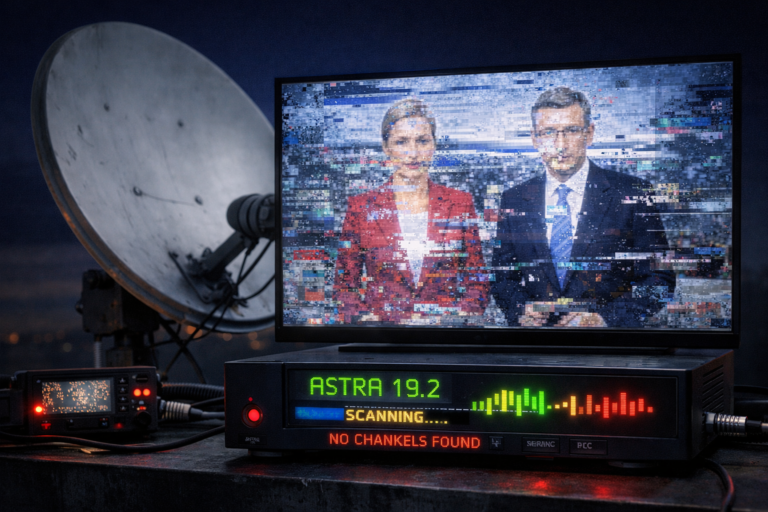
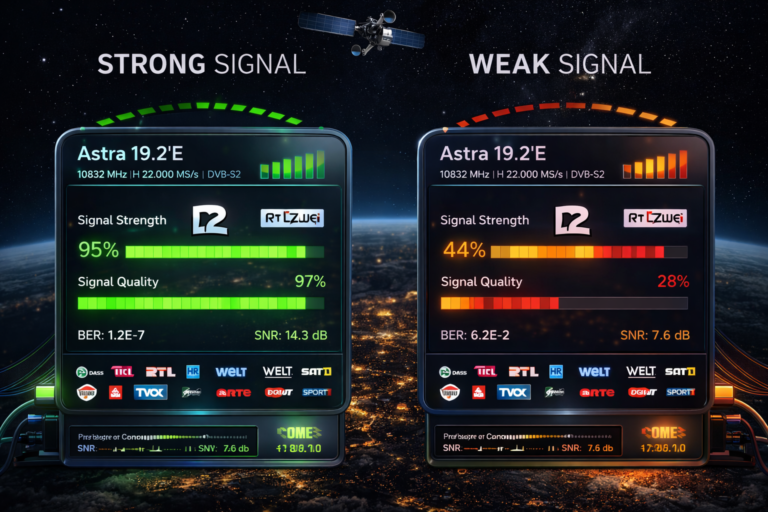
When signal becomes weak on Astra 19.2, not all receivers behave the same. Some continue to show German channels with minor issues, while others lose the signal completely. This difference is not random. It depends on how each receiver processes weak signals internally.
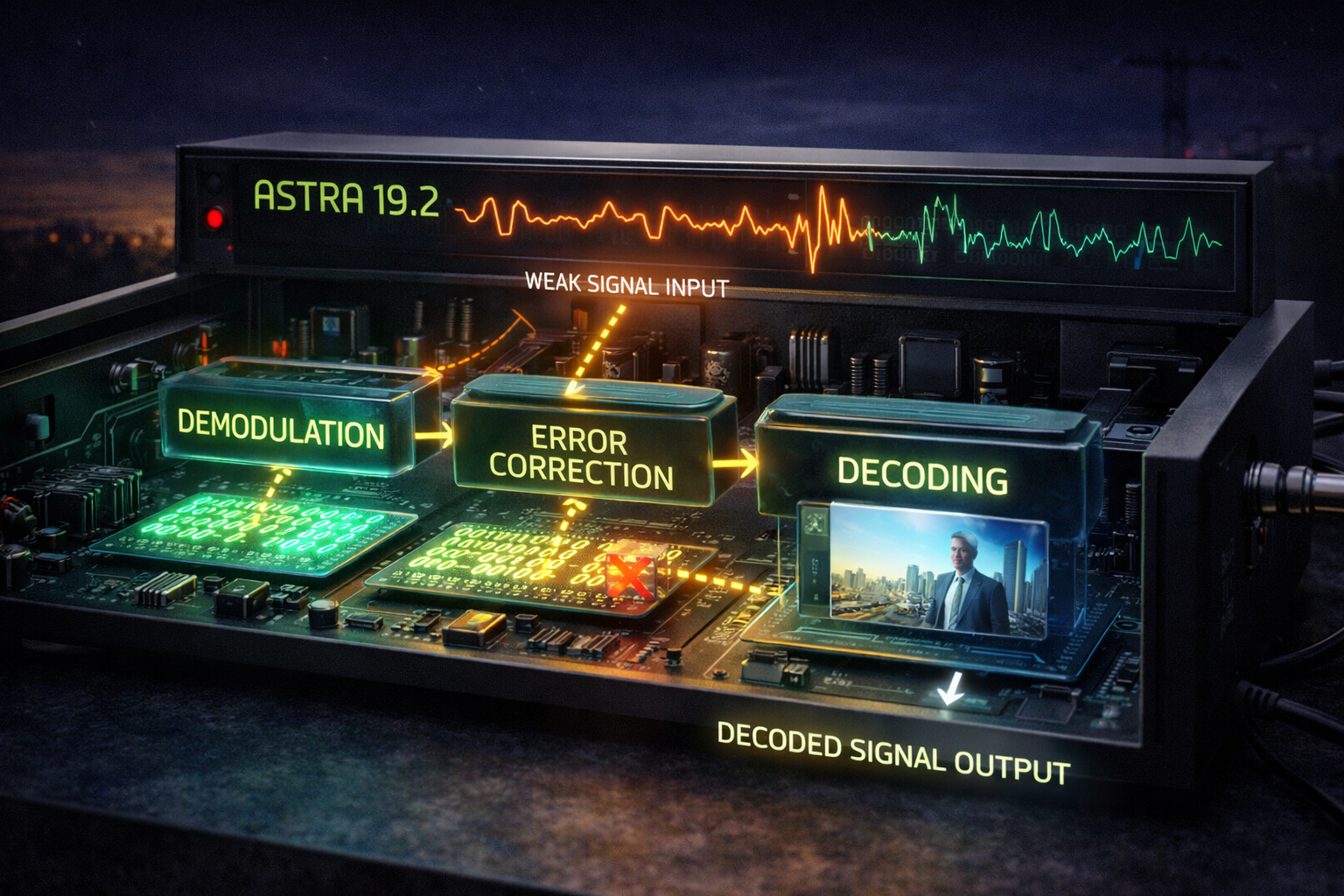
Satellite receivers do more than display channels. They perform complex operations like tuning, demodulation, error correction, and decoding. When the signal is weak, each of these stages becomes critical. Understanding how receivers handle weak signals helps explain why performance varies between setups.
Satellite receivers process weak signals through tuner sensitivity, demodulation accuracy, and error correction systems. The ability to maintain decoding depends on signal quality and receiver design.
- The signal processing chain inside a receiver
- Tuner sensitivity and signal detection
- Demodulation under weak signal conditions
- Error correction and data recovery
- Decoding threshold and signal margin
- Why receivers perform differently
- Real world behavior with weak signals
- Analytical receiver behavior table
- How to improve weak signal handling
- FAQ
The signal processing chain inside a receiver
A satellite receiver processes signals in several stages. First, the tuner selects the frequency and locks onto the signal. Then the demodulator extracts digital data from the signal. After that, error correction systems attempt to fix corrupted data before decoding.
When the signal is strong, all stages work smoothly. When the signal is weak, each stage becomes more difficult. Small errors accumulate and may eventually cause decoding failure.
Understanding this chain helps explain where problems occur when signal quality drops.
Tuner sensitivity and signal detection
The tuner is responsible for detecting and locking onto the signal. A high sensitivity tuner can detect weaker signals more effectively.
If the signal is too weak, the tuner may fail to lock. This results in “no signal” even though some signal energy is present.
Different receivers have different tuner sensitivity levels, which explains performance differences.
Demodulation under weak signal conditions
Demodulation converts the RF signal into digital data. This process requires a stable signal with low noise.
When the signal is weak or noisy, demodulation becomes unstable. The receiver may lose lock intermittently.
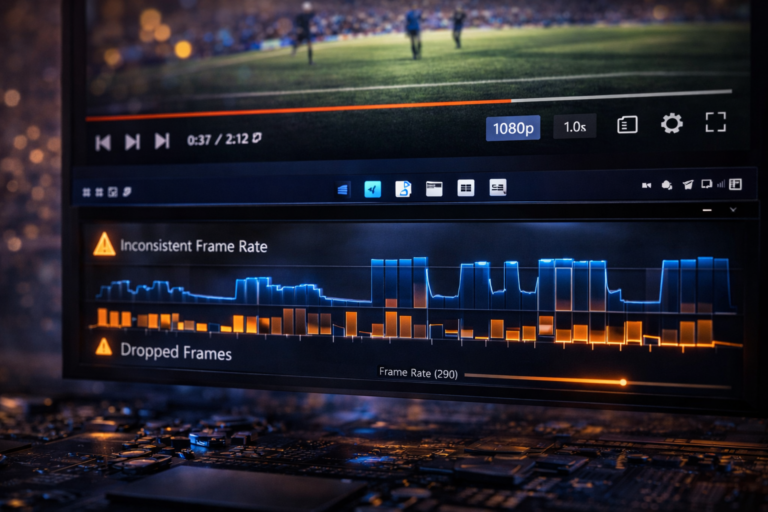
This causes freezing, pixelation, or sudden signal drops.
Error correction and data recovery
Satellite signals include error correction codes. These allow the receiver to recover data even if some parts are corrupted.
When signal quality is slightly degraded, error correction can maintain stable playback. When degradation becomes too severe, error correction fails.
This is the point where freezing turns into complete signal loss.
Decoding threshold and signal margin
Every receiver has a decoding threshold. This is the minimum signal quality required for stable operation.
Signal margin is the difference between current signal quality and this threshold. A higher margin means more stable reception.
Weak signals reduce margin, making the system sensitive to fluctuations.
Why receivers perform differently
Not all receivers are designed equally. Differences in tuner sensitivity, processing power, and firmware affect performance.
Some receivers can handle weak signals better due to more advanced error correction and decoding algorithms.
This is why the same installation may work perfectly with one receiver and poorly with another.
Real world behavior with weak signals
In real setups, weak signals often cause freezing before complete loss. Channels may appear stable for a moment, then break.
Some receivers may still show the channel with occasional glitches, while others lose it completely.
These differences are directly related to how the receiver handles weak signals internally.
Analytical receiver behavior table
| Signal Condition | Receiver Response | Result | Meaning |
|---|---|---|---|
| Strong signal | Stable lock | Smooth playback | Normal operation |
| Moderate signal | Error correction active | Minor glitches | Reduced margin |
| Weak signal | Unstable lock | Freezing | Decoding difficulty |
| Very weak signal | No lock | No signal | Below threshold |
| Fluctuating signal | Repeated locking | Intermittent playback | Unstable conditions |
How to improve weak signal handling
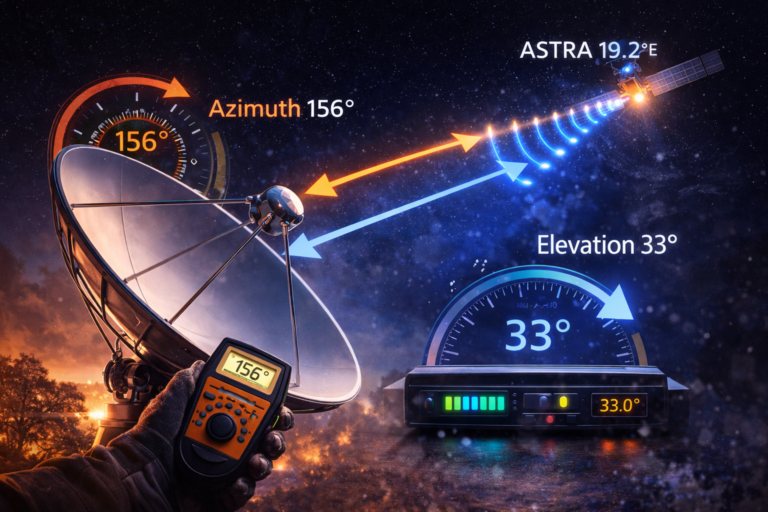
Improve dish alignment to increase signal quality and margin.
Use a high quality LNB with low noise characteristics.
Ensure cables and connectors are in good condition.
Minimize interference and obstacles in the signal path.
If necessary, use a more sensitive receiver for better performance.
Weak signal problems are not always caused by hardware failure. They are often due to low signal margin and receiver limitations.
Satellite receivers handle weak signals through a complex process involving tuning, demodulation, and error correction. The ability to maintain stable reception depends on signal quality and receiver design. Improving signal conditions is always the most effective solution.
FAQ
| Question | Answer |
|---|---|
| Why do some receivers work better with weak signal | Because they have better tuner sensitivity and error correction. |
| What happens when signal is too weak | The receiver cannot decode the signal and shows no signal. |
| Can error correction fix weak signals | Yes, but only up to a certain limit. |
| Why does signal freeze before disappearing | Because decoding becomes unstable before complete failure. |
| How can I improve weak signal performance | Improve alignment, hardware, and signal quality. |