Why Some German Channels Work Better Astra 19.2
Estimated reading time: 12 minutes.
Many users notice something confusing on Astra 19.2. Some German channels work perfectly all the time, while others break, freeze, or disappear under the same conditions. This is not random behavior. It is the result of how satellite signals are structured, transmitted, and received.
Understanding why some channels perform better than others is one of the most important steps in real satellite troubleshooting. Once you understand the technical reasons behind this difference, you can identify problems faster and avoid unnecessary adjustments.
Not all German channels on Astra 19.2 are transmitted under identical conditions. Differences in transponders, frequency bands, polarization, and signal margins cause some channels to be easier to receive than others.
- Why differences between channels exist
- How transponders affect channel performance
- Role of signal quality in channel stability
- Frequency and polarization differences
- LNB and hardware influence on channel performance
- Environmental impact on weaker channels
- Real world behavior differences between channels
- Analytical performance diagnosis table
- How to improve weaker channel performance
- FAQ
Why differences between channels exist
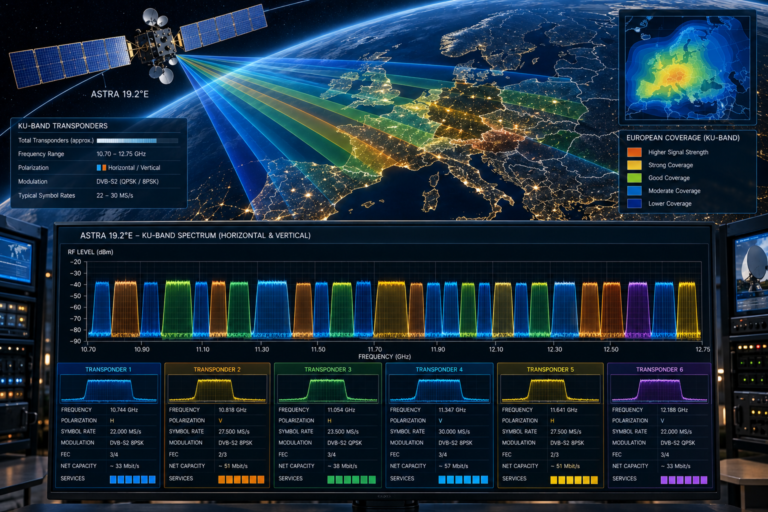
German channels on Astra 19.2 are transmitted through different transponders. Each transponder has its own signal characteristics. This means not all channels share the same reception conditions.
Some transponders have stronger signal margins or more stable transmission parameters. Others may be more sensitive to alignment or weather conditions. This creates noticeable differences in how channels behave.
From a technical point of view, channels are not independent signals. They are grouped inside transmission structures. That is why performance differences always follow group patterns.
How transponders affect channel performance
Each transponder acts as a carrier for multiple channels. If a transponder is easier to receive, all channels inside it will perform better.
Some transponders operate with stronger effective signal coverage. Others may require more precise alignment. This is why certain German channel groups remain stable even under weak signal conditions.
If your dish alignment is slightly off, stronger transponders will still work while weaker ones will fail first.
Role of signal quality in channel stability
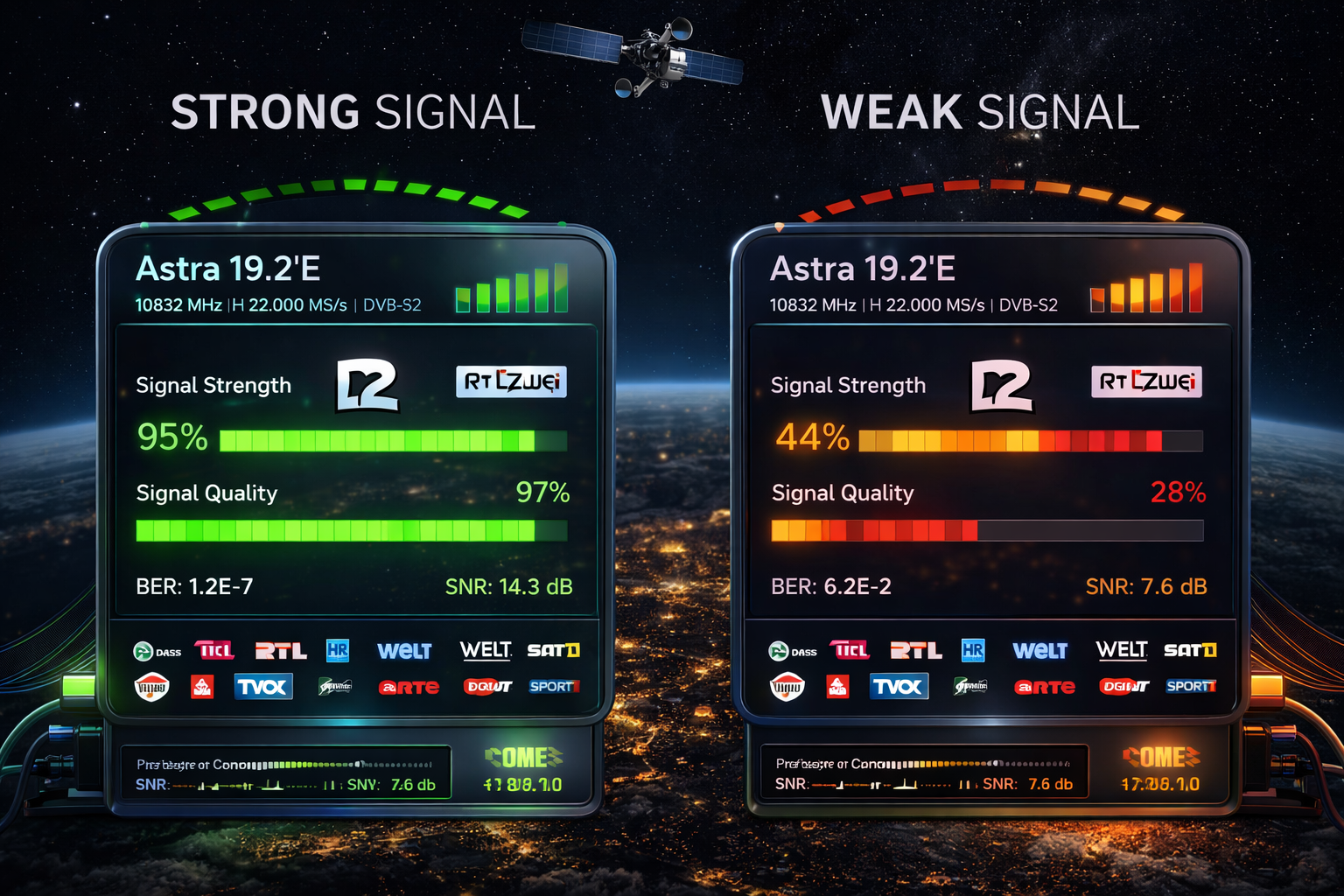
Signal quality is the most important factor in channel performance. It determines whether the receiver can decode the signal correctly.
Even if signal strength is high, poor quality can cause pixelation or channel loss. This is why some channels disappear while others remain stable.
Channels that require higher quality margins will fail earlier when conditions degrade.
Frequency and polarization differences
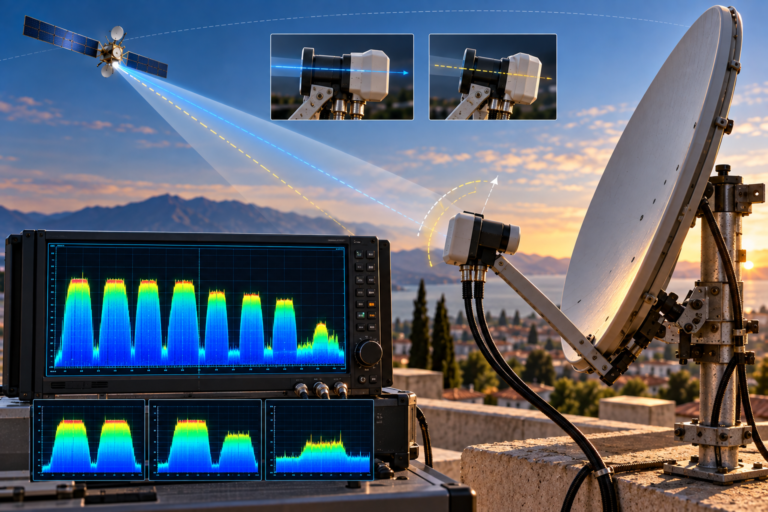
German channels are distributed across different frequencies and polarization planes. This affects how they are received.
If there is a problem in polarization switching, only certain channels will be affected. Similarly, issues in high or low frequency bands can impact specific groups.
This explains why channel performance differences often follow clear technical patterns rather than random behavior.
LNB and hardware influence on channel performance
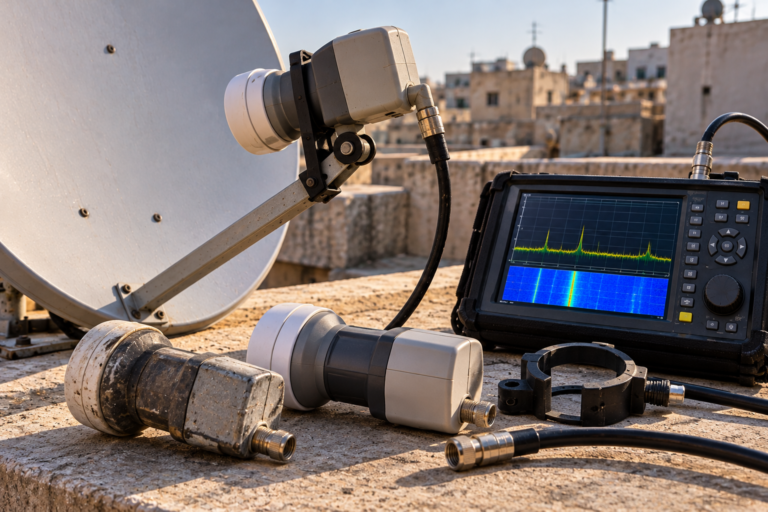
The LNB converts satellite signals into a usable frequency range. Its performance directly affects reception quality.
A weak or unstable LNB may introduce noise or frequency drift. This can impact certain transponders more than others.
Cable quality and connectors also play a role. Small losses in signal can push weaker channels below the decoding threshold.
Environmental impact on weaker channels
Weather conditions such as rain or heavy clouds reduce signal strength. Channels with lower signal margins are affected first.
Obstacles like trees or buildings can also create uneven signal loss. This may impact only certain channels depending on their transmission parameters.
These environmental effects often explain why some German channels fail during bad weather while others continue working.
Real world behavior differences between channels
In many installations, users report that public channels remain stable while some private channels break or disappear. This is usually related to transponder strength and distribution.
Another common example is losing HD channels while SD channels continue working. HD channels often require higher signal quality due to higher data rates.
These patterns are not random. They reflect how channels are distributed and how signal conditions affect each group differently.
Analytical performance diagnosis table
| Symptom | Cause | Meaning | Action |
|---|---|---|---|
| Some channels stable others not | Different transponder strength | Uneven signal distribution | Improve dish alignment |
| HD channels fail first | Higher quality requirement | Low signal margin | Increase signal quality |
| Channels missing by polarization | LNB switching issue | Hardware problem | Check LNB and cables |
| Channels fail during rain | Weak signal margin | Environmental effect | Improve alignment |
| Pixelation on specific channels | Low quality signal | Decoding issue | Adjust dish position |
How to improve weaker channel performance
Start by identifying which channels are unstable. Check their frequency and transponder details.
Compare signal quality between strong and weak channels. This helps identify uneven reception.
Inspect your installation. Check cables, connectors, and LNB condition carefully.
Adjust dish alignment slowly and monitor signal quality changes. Focus on improving weaker channels without losing strong ones.
If needed, consider upgrading hardware such as the LNB or cables to improve overall signal stability.
Differences between channels are normal in satellite systems. They are not caused by random issues. Most problems come from uneven signal margins across transponders.
Some German channels work better on Astra 19.2 because they are transmitted under stronger or more stable conditions. Understanding these differences allows you to troubleshoot more effectively and maintain consistent reception.
FAQ
| Question | Answer |
|---|---|
| Why do some channels work better than others | Because they are on stronger or more stable transponders. |
| Does signal strength guarantee performance | No. Signal quality is more important for stable reception. |
| Can hardware affect channel performance | Yes. LNB and cable quality can impact specific channels. |
| Why do HD channels fail first | They require higher signal quality to decode correctly. |
| Should I rescan channels when performance drops | No. First check signal quality and alignment before rescanning. |