How Sky Italia Uses Internet Instead Of Signal Transmission
Estimated reading time: 10 to 12 minutes.
For many years, television delivery relied on signal transmission. A broadcast signal traveled through space, reached a dish, and was converted into a viewable channel. Today, Sky Italia increasingly uses internet based delivery instead of traditional signal transmission. This change is not just a different method. It represents a complete shift in how video reaches your screen.
Instead of receiving a continuous signal, your device now requests and receives data from remote servers. This process is dynamic, flexible, and adaptive. It allows content to be delivered across different devices and conditions. However, it also introduces new technical behavior that is very different from traditional systems.
Quick Context. Sky Italia replaces signal transmission with internet streaming by delivering video as segmented data over IP networks instead of continuous RF signals from satellites.
Table of Contents
How traditional signal transmission works
How internet streaming replaces signal transmission
Step by step data delivery flow
Why video is divided into segments
Adaptive streaming vs fixed signal
The role of network infrastructure
How traditional signal transmission works
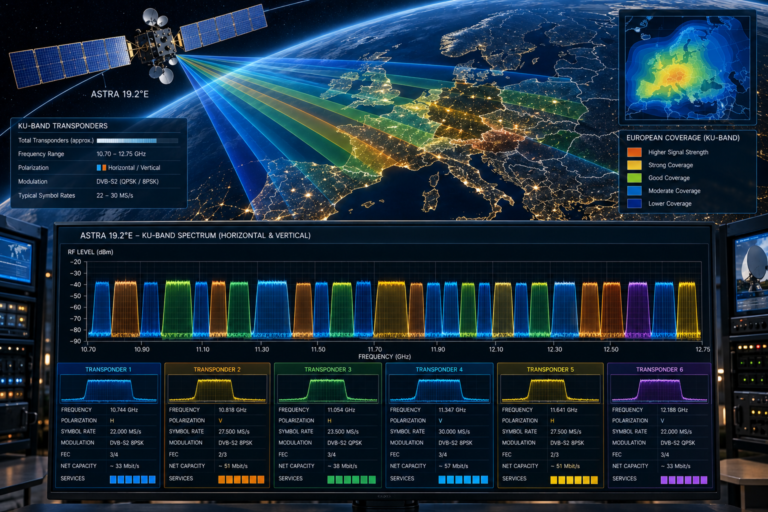
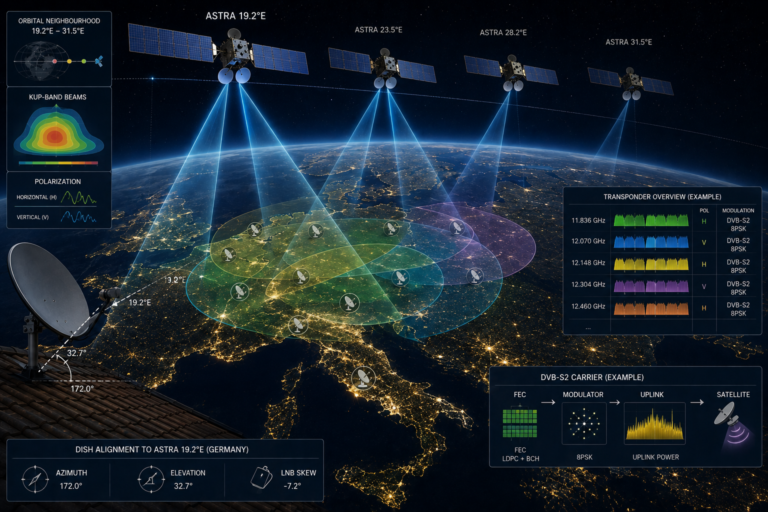
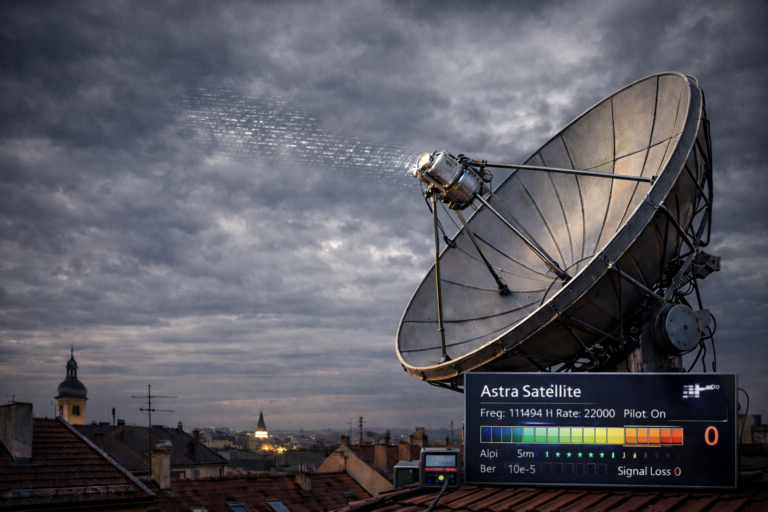
Traditional television systems use a broadcast model. A signal is transmitted from a central source to a satellite, then sent back to receivers on the ground. Every user receives the same signal at the same time.
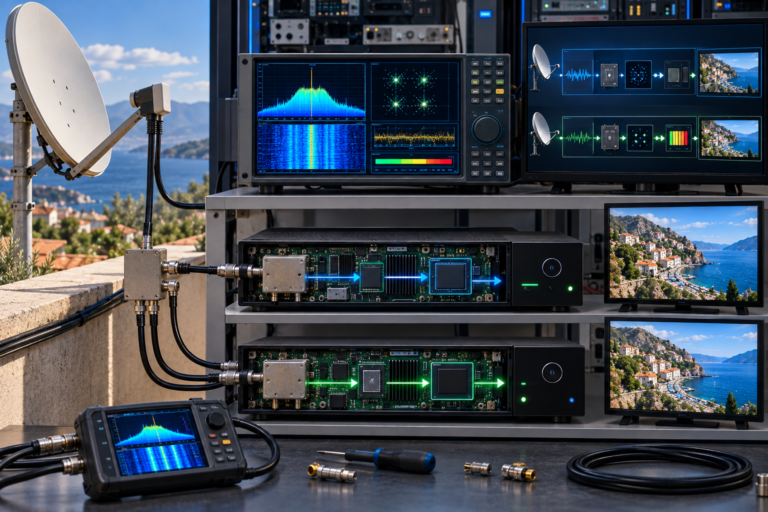
The dish collects the signal, the LNB converts it, and the receiver decodes it. Once the signal is locked, playback remains stable unless physical conditions change.
This system is simple and predictable. It depends mainly on signal strength and alignment.
How internet streaming replaces signal transmission
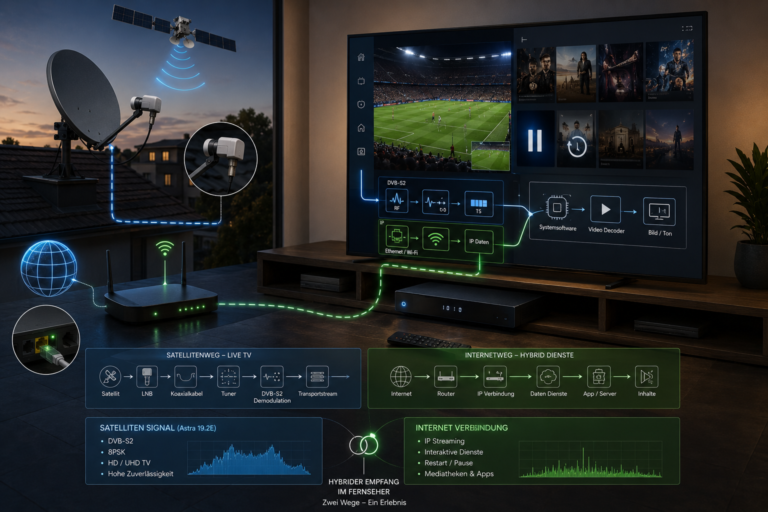
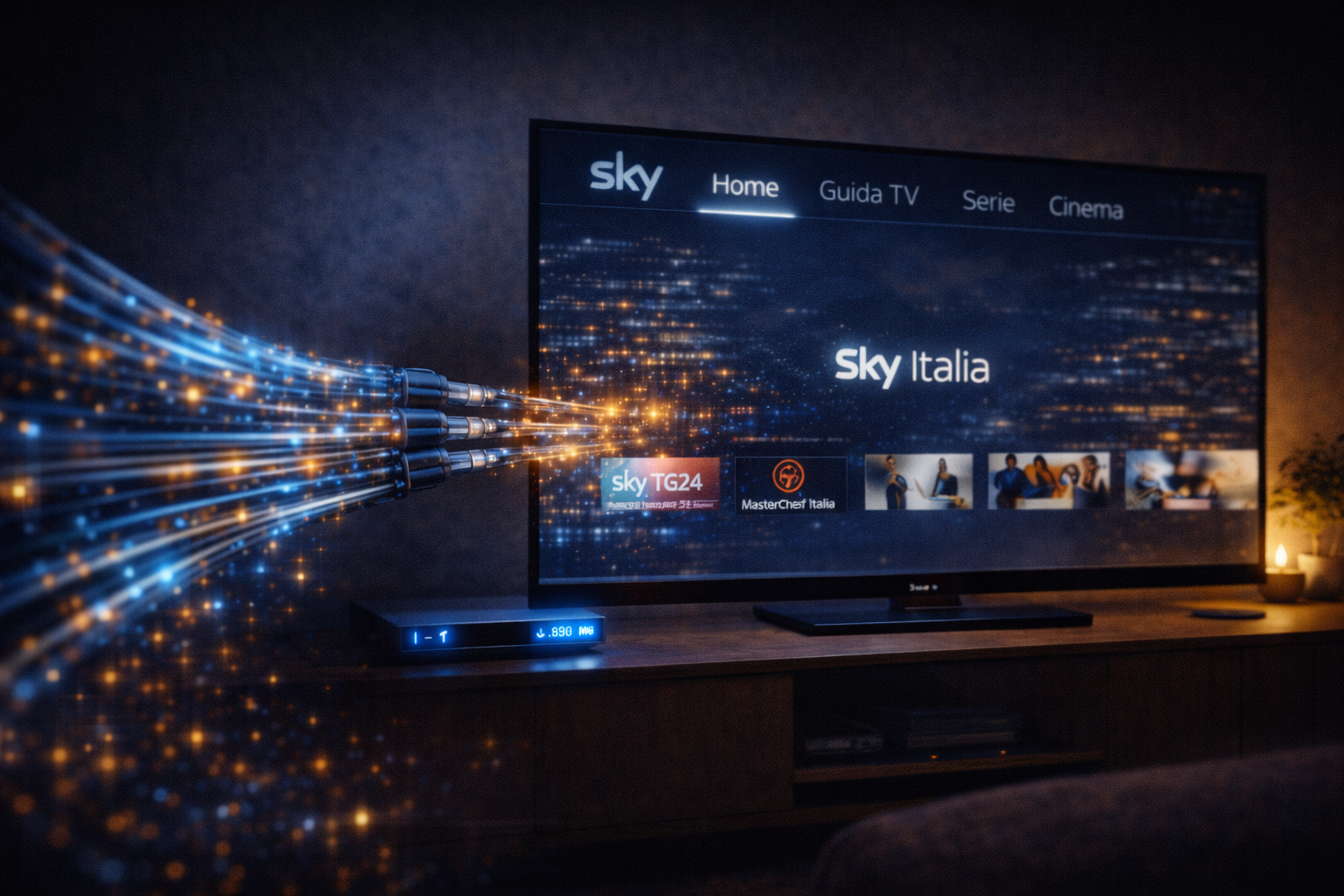
Internet streaming uses a completely different model. Instead of receiving a broadcast signal, your device requests data from servers using an internet connection.
The content is stored on servers and delivered on demand. Each user receives a unique stream based on their request.
This creates a two way communication system. The device asks for data, and the server responds. This process continues continuously during playback.
This is the core difference between signal transmission and streaming.
Step by step data delivery flow
When you select a channel, the app connects to a server and retrieves available stream options. These options represent different quality levels.
The device then begins requesting small pieces of video called segments. Each segment contains a short portion of the stream.
As segments are downloaded, they are stored in a buffer. The device plays these segments in sequence while continuing to request new ones.
This process repeats continuously, creating a smooth playback experience when conditions are stable.
Why video is divided into segments
Segmenting video allows the system to adapt to changing conditions. If the network slows down, smaller or lower quality segments can be delivered instead.
This flexibility is not possible in traditional signal transmission. A broadcast signal cannot change dynamically for each user.
Segmentation also allows recovery from interruptions. If one segment fails, the system can request the next one without restarting the entire stream.
This makes streaming more resilient but also more complex.
Buffering and playback logic
The buffer stores video data before it is played. This ensures that playback continues even if there are small delays in data delivery.
Buffering introduces a delay between real time and playback. However, it protects against interruptions.
In streaming systems, the buffer is essential. Without it, playback would stop whenever data delivery slows down.
This is one of the main differences between streaming and signal based systems.
Adaptive streaming vs fixed signal
Adaptive streaming allows the system to change video quality based on network conditions. If bandwidth decreases, the system lowers quality to maintain playback.
In signal transmission, quality is fixed. It depends on the broadcast signal and cannot adapt to individual conditions.
This adaptability is a major advantage of streaming. It allows content to remain playable even under less than ideal conditions.
However, it also means quality may vary during playback.
The role of network infrastructure
In streaming, the network replaces the satellite as the delivery path. Data travels through multiple network layers before reaching your device.
Performance depends on stability, latency, and consistency. Network congestion and routing changes can affect delivery.
This introduces variability that does not exist in traditional systems. Each user may experience different performance based on their connection.
The network becomes the most critical component of the system.
The role of the device in streaming
The device is no longer just a receiver. It actively manages data requests, buffering, decoding, and playback.
This increases the importance of device capability. Processing power and memory directly affect performance.
Different devices may produce different results even with the same network conditions.
This is a key difference from signal based systems, where the receiver plays a simpler role.
| Aspect | Signal Transmission | Internet Streaming | Impact |
|---|---|---|---|
| Delivery method | Continuous signal | Segmented data | Dynamic playback |
| Communication | One way | Two way | Interactive control |
| Quality control | Fixed | Adaptive | Variable quality |
| Failure type | Signal loss | Buffering or lag | Different behavior |
| Dependency | Physical setup | Network and device | More variables |
Reality Check
Internet streaming does not simply replace signal transmission. It introduces a different system with new strengths and challenges. While it offers flexibility and adaptability, it also depends on network conditions and device performance.
Final Verdict
Sky Italia uses internet streaming instead of signal transmission by shifting from a fixed broadcast model to a dynamic data delivery system. This change allows greater flexibility and modern features but introduces new dependencies on network stability and device capability. Understanding how this system works helps explain why streaming behaves differently from traditional television and how to optimize performance.
FAQ
| Question | Answer |
|---|---|
| How does Sky Italia use internet instead of signal | It delivers video as data segments over the internet instead of broadcasting a continuous signal. |
| Is streaming better than signal transmission | It offers more flexibility but depends on network and device performance. |
| Why does streaming use buffering | Buffering ensures smooth playback by storing data before it is played. |
| Can streaming quality change | Yes. Adaptive streaming adjusts quality based on network conditions. |
| What affects streaming performance | Network stability, latency, and device capability all influence performance. |