Why Your Eutelsat 16E Setup Works Fine Then Stops Randomly
Estimated reading time: 19 minutes.
- Why random failures happen.
- The hidden role of signal margin.
- LNB instability and temperature effects.
- Receiver synchronization behavior.
- Cable and connector degradation.
- Environmental influences.
- Why some channels fail first.
- How to create a more reliable installation.
- Why Failures Seem Random
- Signal Margin Is Usually The Real Cause
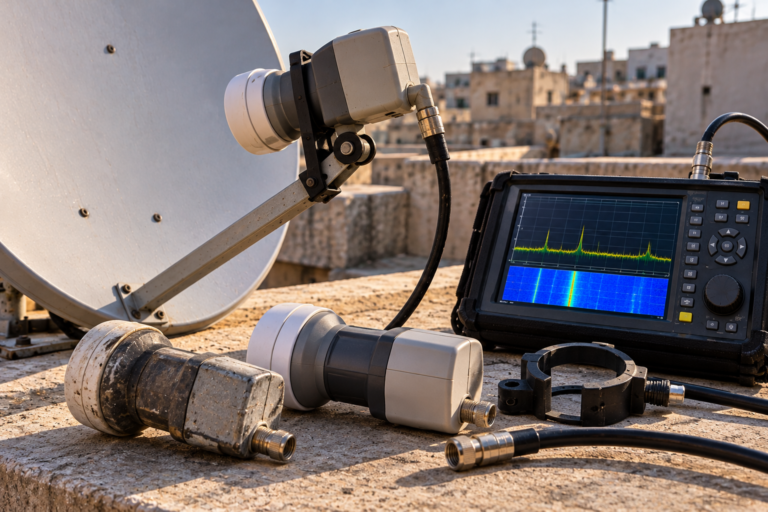
- LNB Stability Changes Over Time
- Receiver Synchronization Can Collapse Suddenly
- Environmental Conditions Constantly Change
- Hidden Cable Problems Create Intermittent Faults
- Why Some Frequencies Fail Before Others
- Daily Reception Variations Add Up
- Technical Comparison Table
- How To Prevent Random Signal Loss
- Reality Check
- Final Verdict
- FAQ
Why Failures Seem Random
Satellite systems operate continuously within changing conditions.
Temperature changes throughout the day.
Humidity changes.
Signal margin fluctuates.
Receivers process millions of bits every second.
When an installation operates close to its limits, small variations eventually become visible.
The failure looks random because the triggering event may be very small.
The underlying weakness often existed long before the problem appeared.
Signal Margin Is Usually The Real Cause
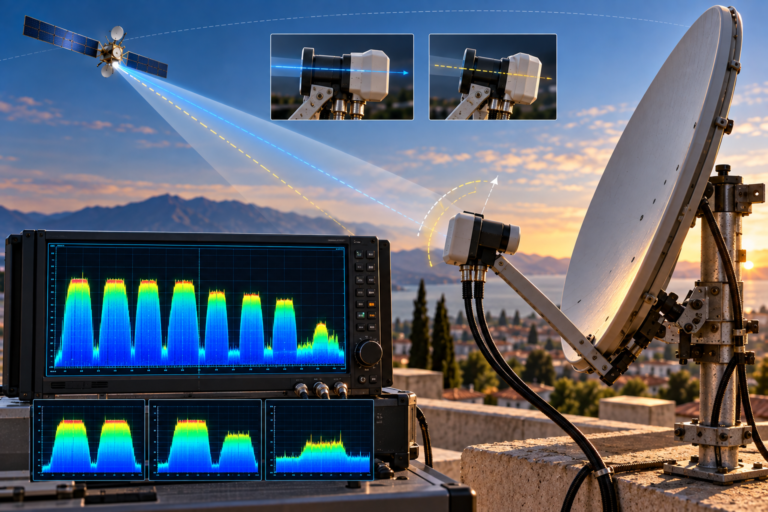
Signal margin is the reserve between current reception quality and the minimum decoding threshold.
Strong installations maintain a comfortable reserve.
Weak installations operate close to failure.
Everything works until normal environmental variation consumes the remaining margin.
At that point channels disappear unexpectedly.
The installation appears broken even though the signal only dropped slightly.
Many random failures are actually margin failures.
The system simply ran out of reserve.
LNB Stability Changes Over Time
The LNB is responsible for frequency conversion.
Its internal oscillator must remain accurate.
As temperature changes or components age, small amounts of frequency drift may occur.
Most receivers compensate automatically.
However, difficult DVB-S2 transponders are often less forgiving.
A system that worked perfectly yesterday may struggle today because the LNB is operating slightly differently.
The change is small but sometimes enough to affect synchronization.
Receiver Synchronization Can Collapse Suddenly
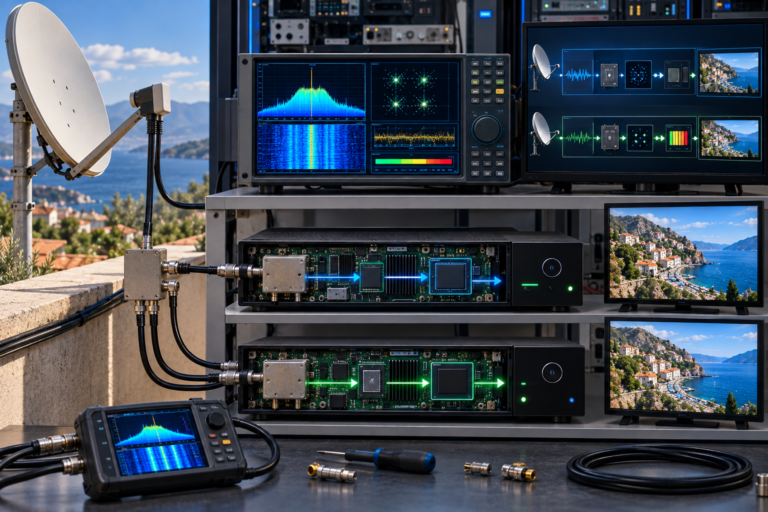
Receivers constantly synchronize with incoming digital streams.
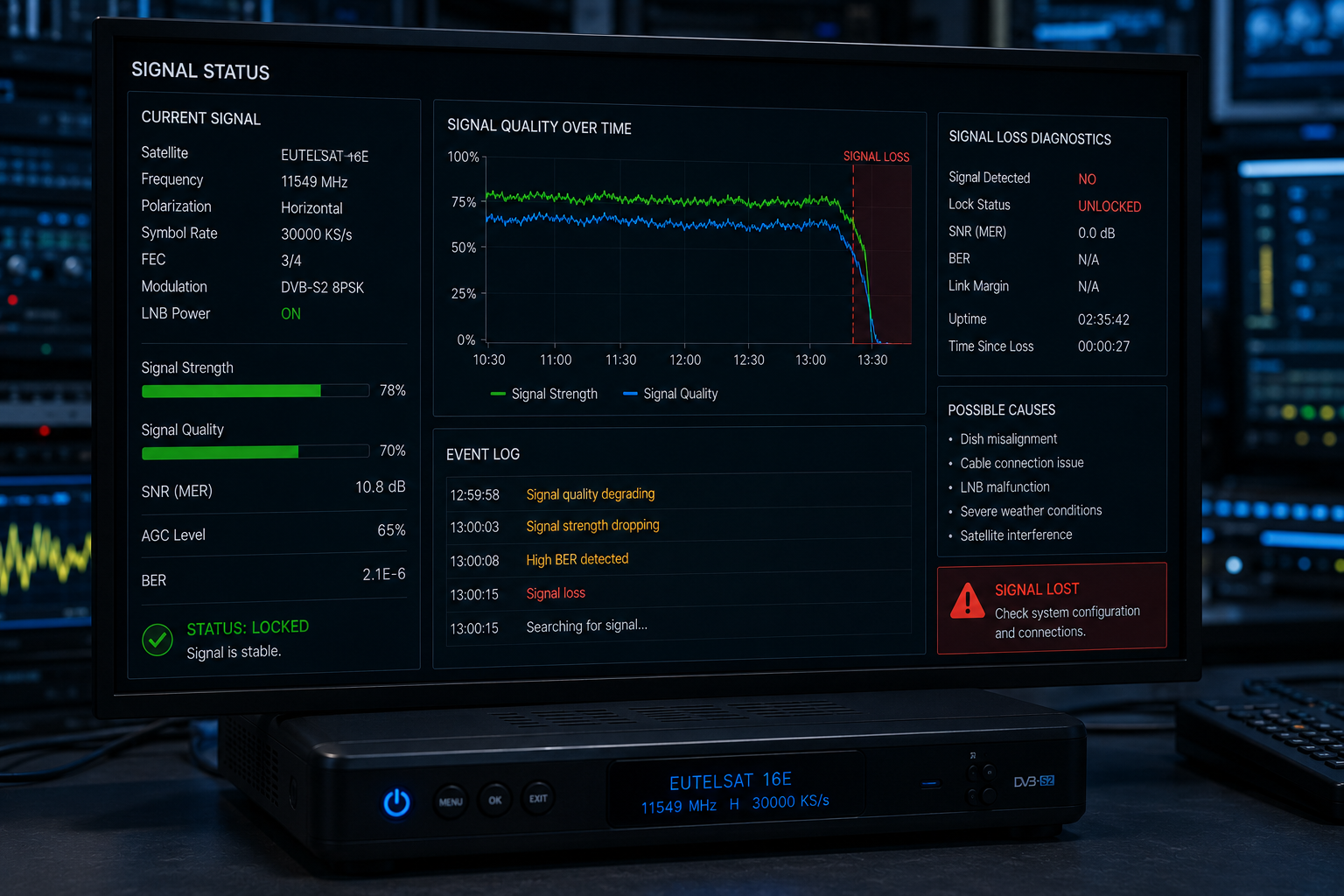
When BER remains low, synchronization is stable.
When BER rises, error correction systems work harder.
Eventually the receiver reaches a point where synchronization becomes unreliable.
Channels freeze.
Audio breaks up.
Services disappear temporarily.
The transition can happen very quickly, making the failure appear random.
Environmental Conditions Constantly Change
Even without storms, the atmosphere changes continuously.
Humidity varies.
Air density changes.
Temperature layers shift.
These factors influence microwave signal propagation.
Strong installations absorb the changes.
Marginal systems reveal them through unstable reception.
What seems like a random outage may actually be an environmental change exposing a hidden weakness.
Hidden Cable Problems Create Intermittent Faults
Coaxial cables rarely fail completely at first.
Moisture, oxidation, and aging gradually increase signal losses.
Connectors may become unstable under changing temperatures.
The result is intermittent behavior.
Channels work normally most of the time.
Then suddenly fail under specific conditions.
Many difficult troubleshooting cases eventually trace back to cable degradation rather than alignment problems.
Why Some Frequencies Fail Before Others
Not all Eutelsat 16E transponders are equally demanding.
Some DVB-S2 multiplexes require cleaner reception conditions.
Others have stronger signal margins.
As a result, the most demanding frequencies often fail first.
Users notice only a handful of missing channels at first.
Over time, additional services become affected.
This gradual progression is a strong indicator of declining signal margin.
Daily Reception Variations Add Up
Reception quality naturally changes throughout the day.
Most of these changes are small.
However, when a system already operates near its limits, several small variations can combine.
A slight temperature change, minor LNB drift, and a small increase in BER may occur simultaneously.
Together they push the receiver below the decoding threshold.
The result appears to be a sudden random failure even though multiple factors contributed.
This behavior explains why reception sometimes returns without any user intervention.
Technical Comparison Table
| Factor | Stable Installation | Random Failure Installation |
|---|---|---|
| Signal margin | High reserve | Minimal reserve |
| LNB stability | Consistent | Possible drift |
| BER | Low | Intermittent spikes |
| Cable condition | Healthy | Possible degradation |
| Weather tolerance | Strong | Limited |
| Reception reliability | Consistent | Unpredictable |
How To Prevent Random Signal Loss
Focus on increasing signal margin.
Optimize dish alignment using signal quality rather than strength.
Verify LNB skew and focal position.
Inspect cables and connectors for corrosion.
Replace aging LNBs when frequency stability becomes questionable.
Monitor BER whenever possible.
The goal is to build enough reserve so that normal environmental changes cannot affect reception.
For a deeper explanation of daily reception fluctuations, read The Real Reason Eutelsat 16E Reception Changes Daily.
Most random Eutelsat 16E failures are not random at all. They are usually the result of limited signal margin, environmental variation, LNB instability, or gradual hardware degradation. The installation may appear healthy while operating much closer to failure than expected.
If your Eutelsat 16E setup works fine and then stops randomly, the most likely cause is a hidden weakness somewhere in the reception chain. Signal margin, LNB performance, BER spikes, cable losses, and changing environmental conditions can combine to push a marginal installation beyond its decoding threshold. Improving overall system margin is the most effective way to eliminate unpredictable reception failures.
FAQ
| Question | Answer |
|---|---|
| Why does my system work for days before failing? | Because small environmental changes eventually consume the remaining signal margin. |
| Can an LNB create intermittent problems? | Yes. Frequency drift and aging components often cause unpredictable behavior. |
| Why do channels return by themselves? | Because reception conditions improve and the receiver regains synchronization. |
| Can cables cause random signal loss? | Yes. Moisture and connector degradation frequently create intermittent faults. |
| Why are only some channels affected? | Different transponders have different sensitivity and decoding requirements. |
| What is the best long-term solution? | Increase signal margin through proper alignment, stable hardware, and good cable quality. |