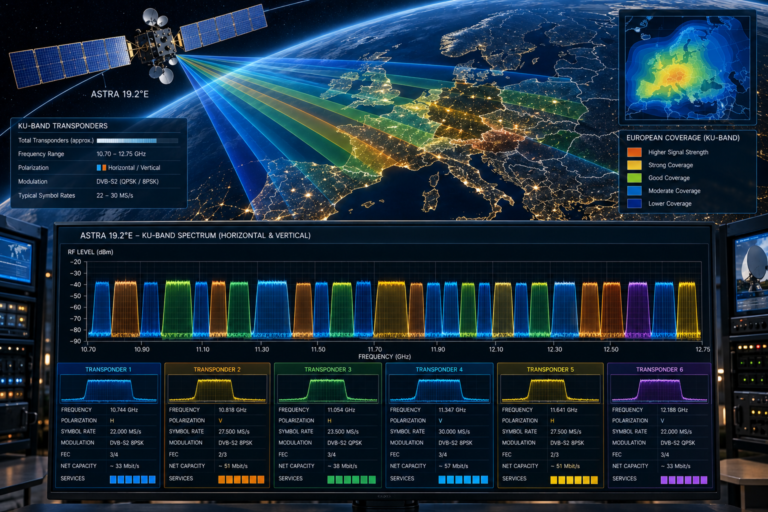
Why Tring TV Works Better Early In The Morning
Estimated Reading Time: 10 minutes
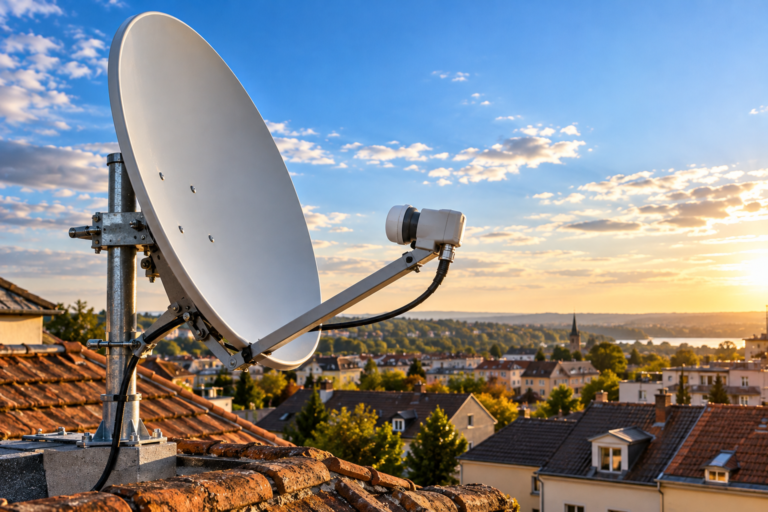
Many satellite TV users notice something interesting. Tring TV channels often seem more stable during the early morning than later in the afternoon or evening. HD channels lock more quickly, signal quality appears slightly higher, and brief pixelation becomes less common. At first glance, this can make it seem as though the satellite itself changes its transmission power throughout the day.
In reality, satellite operators maintain remarkably stable transmission levels. The changes that viewers experience usually occur much closer to home. Temperature, atmospheric conditions, LNB behavior, RF noise, and the available signal margin all influence how easily the receiver can decode a DVB-S2 transport stream. Understanding these engineering principles explains why reception sometimes feels noticeably better shortly after sunrise.
Morning reception improvements are usually caused by more favorable operating conditions inside the receiving system rather than changes in satellite transmission. Cooler equipment, lower atmospheric disturbance, and improved signal margin can make the DVB-S2 receiver operate with greater stability under the same broadcast signal.
- Does The Satellite Transmit More Power In The Morning?
- How Temperature Influences Satellite Reception
- The Effect Of LNB Temperature Stability
- Signal Margin Changes Throughout The Day
- BER, MER And Receiver Performance
- Atmospheric Conditions And RF Propagation
- Receiver Synchronization During Cooler Conditions
- How To Improve Stability Throughout The Entire Day
- Reality Check
- Final Verdict
- FAQ
Does The Satellite Transmit More Power In The Morning?
No.
Communication satellites are designed to provide extremely stable broadcast services around the clock. The transmitted carrier power and modulation remain essentially constant regardless of the time of day.
If reception seems better during the morning, the improvement almost always comes from the receiving side of the satellite link. The dish, the LNB, the surrounding environment, and the receiver itself determine how much usable signal reaches the DVB-S2 decoder.
How Temperature Influences Satellite Reception
Electronic components naturally generate thermal noise. As outdoor temperatures increase during the day, every component in the receiving chain experiences additional thermal stress.
Although quality satellite equipment is designed to operate across wide temperature ranges, cooler morning conditions often allow components to work closer to their ideal operating characteristics. Lower temperatures can slightly reduce internally generated noise and improve overall receiver sensitivity, particularly when the installation already operates with limited signal margin.
These changes are usually small, but satellite reception often depends on fractions of a decibel. A modest improvement in carrier-to-noise ratio may be enough to eliminate intermittent decoding errors.
The Effect Of LNB Temperature Stability
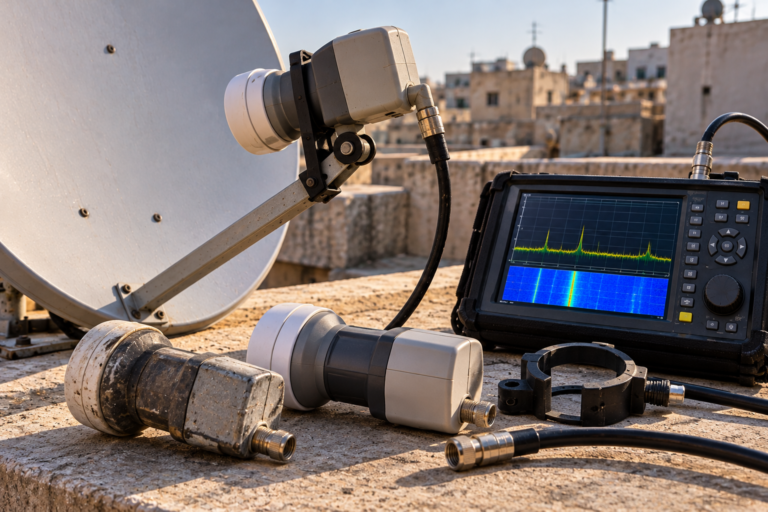
The Low Noise Block converter is one of the most critical components in any satellite installation.
Its first task is to amplify an extremely weak microwave signal arriving from approximately 36,000 kilometers away. It then converts that signal into an intermediate frequency that the receiver can process through ordinary coaxial cable.
Inside the LNB, a local oscillator generates a reference frequency used during frequency conversion. Temperature changes slightly affect oscillator stability. Modern LNBs are designed to compensate for these variations, but excessive heating can increase frequency drift and reduce the receiver’s available operating margin. DVB-S2 receivers continuously compensate for normal oscillator variations while maintaining synchronization with the incoming carrier. :contentReference[oaicite:0]{index=0}
During cooler morning hours, oscillator stability is often slightly improved, allowing the receiver to track the carrier with less effort.
Signal Margin Changes Throughout The Day
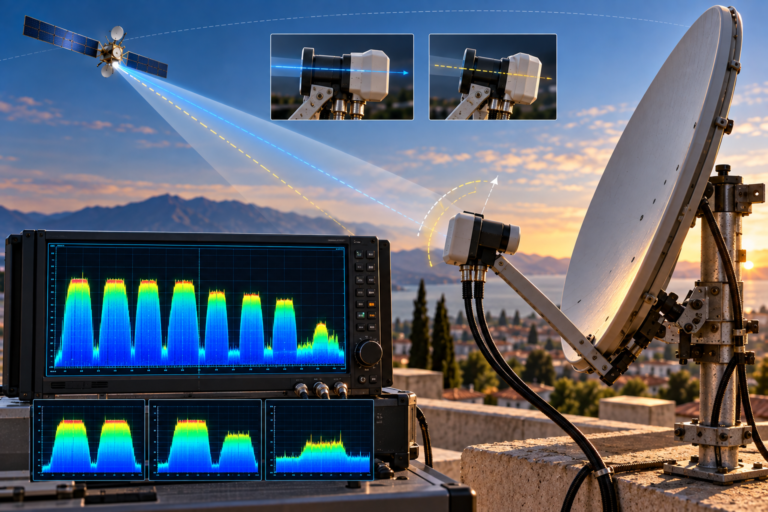
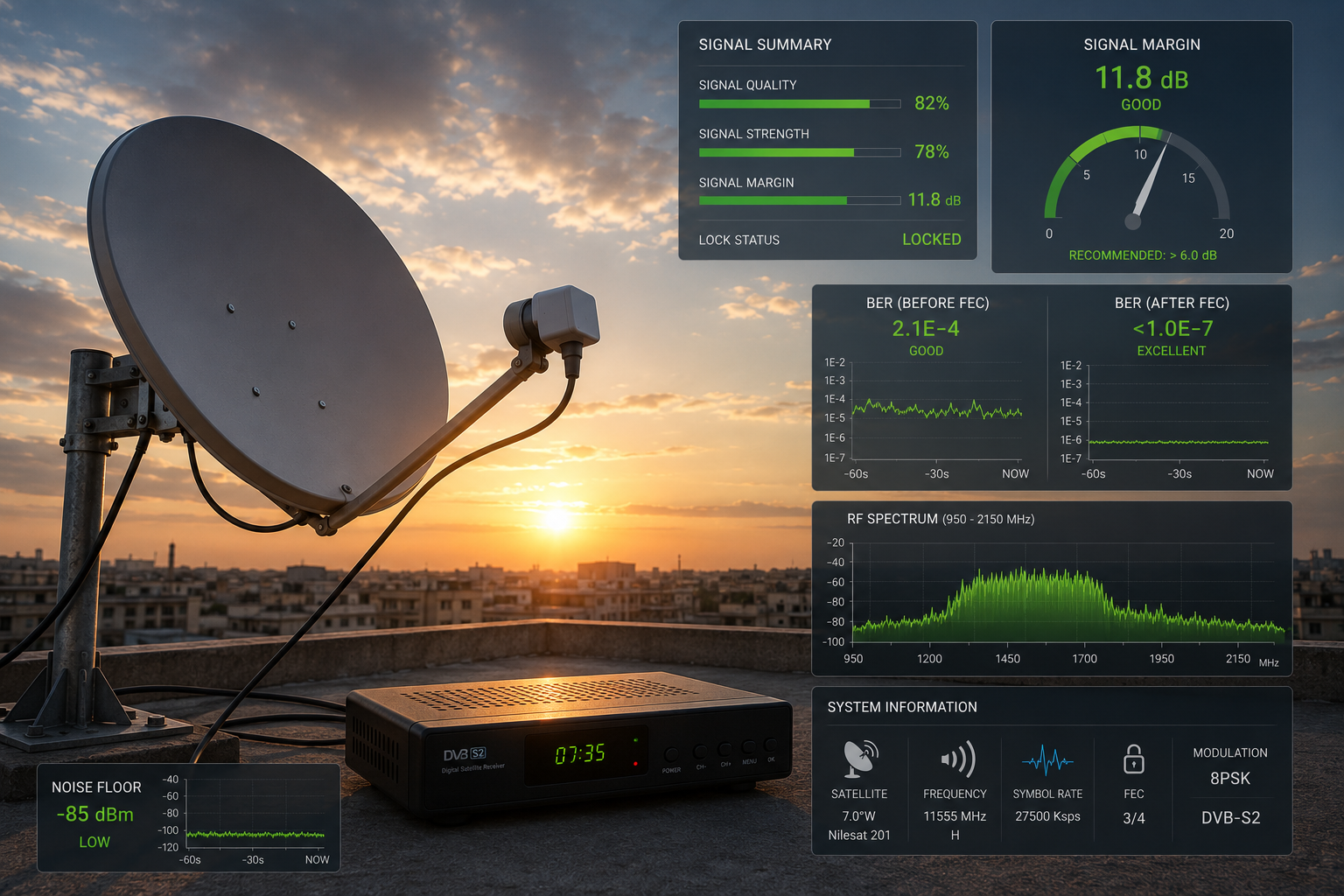
Signal margin represents the difference between current reception conditions and the minimum level required for reliable DVB-S2 decoding.
Imagine two identical satellite systems. One operates with a generous signal margin, while the other operates very close to the decoding threshold. The first installation will remain stable almost all day. The second may work perfectly in the morning but begin showing intermittent problems as equipment temperature rises and additional environmental losses accumulate.
This explains why two neighboring homes using the same satellite service may experience completely different levels of reliability.
| Condition | Effect On Receiver | Visible Result |
|---|---|---|
| Cool morning temperatures | Stable oscillator performance | Smoother reception |
| Large signal margin | Reliable DVB-S2 decoding | Stable HD channels |
| High afternoon temperatures | Reduced operating margin | Occasional pixelation |
| Rain or additional attenuation | Higher BER | Decoder recovery or signal loss |
BER, MER And Receiver Performance
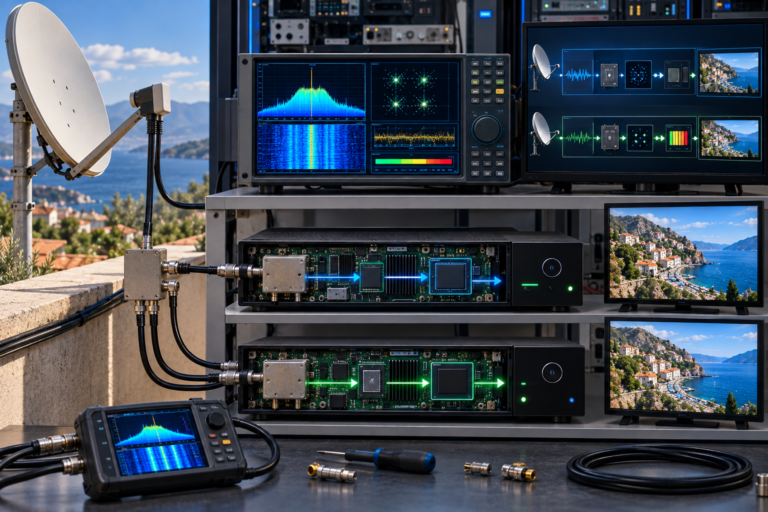
Professional engineers monitor Bit Error Rate (BER) and Modulation Error Ratio (MER) because these measurements reveal the actual quality of the received signal.
A low BER means that very few transmission errors reach the decoder. A high MER indicates that the received modulation closely matches the transmitted constellation. Together, these measurements provide a much better indication of reception quality than signal strength alone.
When environmental conditions improve slightly during the morning, BER often decreases while MER improves, giving the Forward Error Correction system a larger safety margin. DVB-S2 achieves reliable decoding by combining powerful LDPC and BCH error correction techniques that operate close to theoretical channel limits. :contentReference[oaicite:1]{index=1}
Atmospheric Conditions And RF Propagation
Satellite signals travel through Earth’s atmosphere before reaching the receiving dish.
Early morning conditions are frequently calmer than those experienced later in the day. Air temperature is generally lower, wind speeds may be reduced, and thunderstorms are less common in many regions.
Although Ku-band television signals are affected far less by normal daily atmospheric changes than by heavy rainfall, stable environmental conditions help preserve available signal margin. The largest environmental threat remains rain fade, which absorbs microwave energy and increases attenuation along the satellite path. :contentReference[oaicite:2]{index=2}
Receiver Synchronization During Cooler Conditions
The receiver never stops synchronizing with the incoming DVB-S2 carrier.
Carrier recovery, symbol timing, phase tracking, Forward Error Correction, and transport stream reconstruction all occur continuously while television is playing.
When RF conditions remain stable, these synchronization processes require fewer corrections, allowing the receiver to maintain a consistent transport stream with minimal packet loss. This produces smoother video playback and fewer visible interruptions.
If reception conditions become marginal later in the day, the receiver must perform more frequent synchronization adjustments. Although these corrections happen automatically, they may occasionally become visible as brief freezes or macroblocking.
How To Improve Stability Throughout The Entire Day
If your Tring TV installation performs noticeably better every morning than during the afternoon, treat it as a useful diagnostic clue rather than a mystery.
Check dish alignment carefully, verify that outdoor connectors remain dry and corrosion-free, inspect the LNB for signs of aging, and confirm that the dish mount is completely rigid. Increasing signal margin by even a small amount often eliminates the daily variations that become visible under changing environmental conditions.
If reception becomes significantly worse whenever rainfall arrives, you may also find our detailed explanation of why rain affects Total TV more than expected helpful for understanding how atmospheric attenuation influences satellite signals.
Morning reception is not better because the satellite transmits a stronger signal. The improvement usually comes from cooler equipment, slightly better operating conditions, and increased signal margin inside the receiving installation. Even very small changes in RF performance can noticeably affect DVB-S2 decoding when the installation already operates close to its reception limit.
Tring TV often works better early in the morning because the receiving system operates under more favorable conditions. Cooler temperatures improve LNB stability, RF noise is often slightly lower, and the receiver benefits from greater signal margin while maintaining DVB-S2 synchronization. Understanding these factors allows satellite enthusiasts to diagnose recurring daytime reception problems logically instead of assuming the satellite transmission itself has changed.
| Question | Answer |
|---|---|
| Does the satellite increase transmission power in the morning? | No. Satellite broadcast power remains essentially constant throughout the day. |
| Why do HD channels seem more stable after sunrise? | Cooler equipment and slightly improved operating conditions often increase available signal margin. |
| Can LNB temperature affect reception? | Yes. Temperature influences oscillator stability and overall RF performance. |
| Is signal strength more important than BER? | No. BER, MER, and signal margin provide a much better indication of actual decoding reliability. |
| Can better dish alignment reduce daily reception changes? | Yes. Increasing signal margin through accurate alignment often eliminates temperature-related reception variations. |